

 ACNH Sea Creatures Guide: When & How to Catch All 40 sea creatures
Animal Crossing: New Horizons features 40 sea creatures that you can catch by swimming and diving. Each species has its own selling price, active hours, and seasonal availability. Knowing when to dive can help you earn Bells and complete your Critterpedia.
This guide covers how to catch sea creatures, their availability in both hemispheres, the most valuable catches, and tips for finding fast-moving targets.
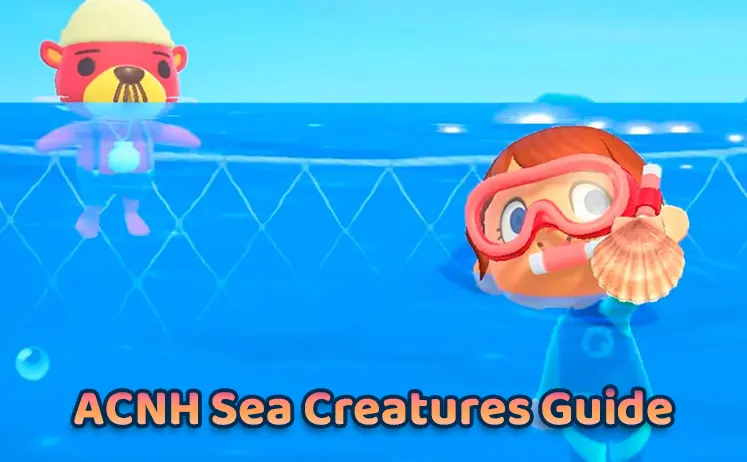
How to Swim and Catch Sea Creatures
You need a wetsuit to swim and dive in the ocean. You can purchase one from Nook’s Cranny or through available Nook Shopping options.
-
Equip your wetsuit and press A to enter the water.
-
Swim toward the bubbles rising to the surface.
-
Press Y to dive when you are close to the bubbles.
-
Move underwater toward the shadow. You will automatically catch the creature when you reach it.
A snorkel is a cosmetic accessory, not a requirement for diving. After catching a sea creature, you can donate it to the Museum or sell it for Bells.
All 40 Sea Creatures: Prices, Times, and Availability
The tables below list all 40 sea creatures, their selling prices, active hours, and available months. NH stands for Northern Hemisphere, while SH stands for Southern Hemisphere.
“All day” means there is no time-of-day restriction, although the creature may still be available only during certain months.
Sea Creatures Available All Day
These creatures have no specific active hours. They are sorted by their earliest available month in the Northern Hemisphere, with year-round species listed last.
| Sea Creature | Price (Bells) | NH Months | SH Months |
| Turban Shell | 1,000 | Mar–May, Sep–Dec | Mar–Jun, Sep–Nov |
| Umbrella Octopus | 6,000 | Mar–May, Sep–Nov | Mar–May, Sep–Nov |
| Spider Crab | 12,000 | Mar–Apr | Sep–Oct |
| Lobster | 4,500 | Apr–Jun, Dec–Jan | Jun–Jul, Oct–Dec |
| Sea Pineapple | 1,500 | Apr–Aug | Oct–Feb |
| Sea Urchin | 1,700 | May–Sep | Nov–Mar |
| Gigas Giant Clam | 15,000 | May–Sep | Nov–Mar |
| Sea Grapes | 900 | Jun–Sep | Dec–Mar |
| Mussel | 1,500 | Jun–Dec | Dec–Jun |
| Gazami Crab | 2,200 | Jun–Nov | Dec–May |
| Moon Jellyfish | 600 | Jul–Sep | Jan–Mar |
| Oyster | 1,100 | Sep–Feb | Mar–Aug |
| Seaweed | 600 | Oct–Jul | Apr–Jan |
| Venus’ Flower Basket | 5,000 | Oct–Feb | Apr–Aug |
| Sea Cucumber | 500 | Nov–Apr | May–Oct |
| Dungeness Crab | 1,900 | Nov–May | May–Nov |
| Snow Crab | 6,000 | Nov–Apr | May–Oct |
| Red King Crab | 8,000 | Nov–Mar | May–Sep |
| Sea Star | 500 | All year | All year |
| Sea Anemone | 500 | All year | All year |
| Sea Slug | 600 | All year | All year |
| Pearl Oyster | 2,800 | All year | All year |
| Scallop | 1,200 | All year | All year |
| Whelk | 1,000 | All year | All year |
| Octopus | 1,200 | All year | All year |
| Acorn Barnacle | 600 | All year | All year |
Sea Creatures Active from 4 PM to 9 AM
These creatures appear in the afternoon or evening and remain available until the following morning.
| Sea Creature | Price (Bells) | NH Months | SH Months |
| Sea Pig | 10,000 | Nov–Feb | May–Aug |
| Slate Pencil Urchin | 2,000 | May–Sep | Nov–Mar |
| Abalone | 2,000 | Jun–Jan | Dec–Jul |
| Chambered Nautilus | 1,800 | Mar–Jun, Sep–Nov | Mar–May, Sep–Dec |
| Vampire Squid | 10,000 | May–Aug | Nov–Feb |
| Tiger Prawn | 3,000 | Jun–Sep | Dec–Mar |
| Sweet Shrimp | 1,400 | Sep–Feb | Mar–Aug |
| Mantis Shrimp | 2,500 | All year | All year |
| Flatworm | 700 | Aug–Sep | Feb–Mar |
Sea Creatures Active from 9 PM to 4 AM
These creatures are available during nighttime hours, making them suitable targets for night diving.
| Sea Creature | Price (Bells) | NH Months | SH Months |
|---|---|---|---|
| Firefly Squid | 1,400 | Mar–Jun | Sep–Dec |
| Spiny Lobster | 5,000 | Oct–Dec | Apr–Jun |
| Horseshoe Crab | 2,500 | Jul–Sep | Jan–Mar |
Sea Creatures Active During Both Day and Night
| Sea Creature | Price (Bells) | Active Hours | NH Months | SH Months |
|---|---|---|---|---|
| Spotted Garden Eel | 1,100 | 4 AM–9 PM | May–Oct | Nov–Apr |
| Giant Isopod | 12,000 | 9 AM–4 PM, 9 PM–4 AM | Jul–Oct | Jan–Apr |
Which Sea Creatures Are Worth Catching?
If you want to earn more Bells from diving, prioritize high-value sea creatures when they are available.
| Sea Creature | Selling Price | Active Hours |
| Gigas Giant Clam | 15,000 Bells | All day |
| Spider Crab | 12,000 Bells | All day |
| Giant Isopod | 12,000 Bells | 9 AM–4 PM, 9 PM–4 AM |
| Sea Pig | 10,000 Bells | 4 PM–9 AM |
| Vampire Squid | 10,000 Bells | 4 PM–9 AM |
| Red King Crab | 8,000 Bells | All day |
These creatures are not available throughout the entire year, so check the tables before planning a diving session.
Selling valuable catches is a useful way to earn Bells. However, if you have not donated a species to the Museum yet, consider donating your first catch before selling duplicates.
How to Catch Fast-Moving Sea Creatures
Sea creatures leave bubbles at the surface, and their shadows vary in size. Some barely move, while others quickly swim away when you approach.
Use these techniques to improve your chances of catching them:
- Approach slowly: Use gentle movements when getting close to a target instead of repeatedly pressing A to swim quickly.
- Follow the bubbles: Swim toward the bubbles, dive when you are close, and try to intercept the creature underwater.
- Watch its direction: If the shadow moves away, adjust your underwater position instead of chasing blindly.
- Use the ocean boundary carefully: You can try intercepting a fast-moving creature near the edge of the swimming area, although this is not guaranteed to work every time.
A larger shadow does not necessarily mean a higher selling price. Check the species after catching it rather than judging its value by shadow size alone.
Seasonal Planning for Both Hemispheres
Sea creature availability changes according to your island’s hemisphere. The two hemispheres generally follow opposite seasonal schedules, although some species appear during the same months in both.
Before diving, check three things:
- Month: Confirm that the species is available in your hemisphere.
- Time: Check whether it appears all day or only during certain hours.
- Collection progress: Prioritize creatures you have not yet donated to the Museum.
If you are looking for a particular species, use the tables above to check its availability. Do not assume that a creature will appear simply because the weather or season seems suitable.
Pascal, Scallops, and Pearls
Scallops are available throughout the year and have no specific time-of-day restriction. Finding one may trigger an encounter with Pascal, who can offer a Mermaid-themed DIY recipe, a Pearl, or a Mermaid clothing item.
However, catching a Scallop does not guarantee that Pascal will appear every time. If you do not encounter him, continue diving and try again when the encounter conditions allow.
Pearls are also important crafting materials for Mermaid-themed furniture. You can find them while diving, and Pascal may give you one as a reward. Keep any Pearls you need for crafting before selling extras.
How to Complete the Museum Sea Creature Collection
To complete the Museum’s sea creature collection, donate one specimen of each of the 40 species to Blathers. Once a species has been donated, you can sell duplicate catches.
Use the tables to identify missing species and plan your next diving session around their availability. For creatures with restricted active hours, you must meet both the monthly and time requirements.
Check your Critterpedia after catching new species to track your progress and avoid spending time searching for creatures you have already registered.

